

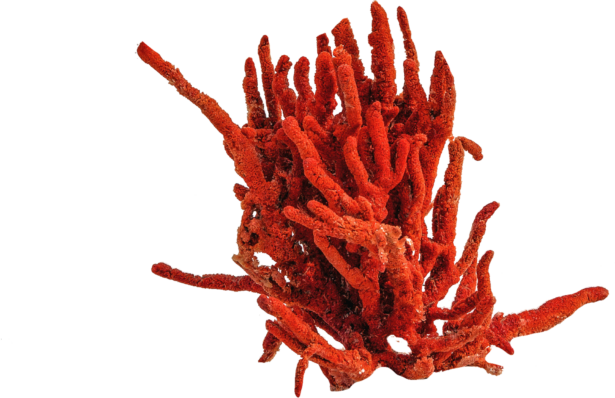
Torre del Greco, situated on the western flank of Vesuvius overlooking the Bay of Naples, operates less as a conventional city and more as a highly specialized industrial organism. Its defining characteristic, the coral industry, dictates its socio-spatial morphology, daily routines, and economic trajectory with a precision that borders on algorithmic. This is a locale where the urban fabric is not merely built but *forged* by a singular craft, establishing a functional interdependence between its inhabitants and a finite marine resource.
The town’s primary function revolves around the acquisition, transformation, and distribution of coral. While the local Mediterranean coral beds have long been depleted, Torre del Greco maintains its preeminence by importing raw material from diverse global sources—from the Pacific to the depths of the Sardinian sea. This global supply chain is the lifeblood of its workshops, which are often found tucked within residential blocks or concentrated in specific industrial zones, forming a network of specialized skills. The procedural stages—from the initial selection and cutting of raw branches to the intricate carving, shaping, and polishing of ornaments—are performed by a highly stratified workforce. Generational knowledge transfer remains a cornerstone of this system, manifesting in a complex vocational hierarchy.
The socio-spatial logic of Torre del Greco reflects this industrial specialization. The historical port, once the primary entry point for raw coral, retains its symbolic importance as the nexus of maritime trade, even as modern logistics often reroute materials through larger hubs. Inland, the town’s dense layout reveals the integration of workshops and residential spaces, blurring the lines between domestic life and industrial labor. Specific streets and districts are implicitly understood as centers for particular facets of coral processing or trade, creating an internal geography that is legible to those within the industry but opaque to outsiders. This spatial arrangement facilitates the flow of materials and expertise, underscoring a communal identity forged through shared craft.
Daily routines in Torre del Greco are orchestrated by the demands of the workshops. The rhythmic sounds of grinding, cutting, and polishing tools emanate from specialized ateliers, beginning in the early hours and persisting through the afternoon. These routines are less influenced by external seasonal tourism patterns and more by the internal tempo of production cycles, international trade fairs, and the fluctuating availability of raw coral. The industry functions on a cycle of supply and demand, with peaks dictated by global market trends rather than local climatic shifts. Infrastructure, particularly the electricity supply and waste management systems, is engineered to support these energy-intensive artisanal processes, managing the byproducts of stone and organic material.
However, the specialized nature of Torre del Greco’s economy inherently creates specific limits and consequences. The most significant of these is its absolute dependence on a resource facing increasing global scrutiny regarding sustainability and ethical harvesting. As coral populations dwindle and international regulations tighten, the town faces the complex challenge of adapting its core industry without undermining its identity. Economically, reliance on a niche market leaves it vulnerable to shifts in global fashion trends, geopolitical instabilities affecting supply chains, and competition from alternative materials or production centers. Demographically, the demanding nature of the craft and the economic uncertainties present a continuous challenge in attracting and retaining younger generations, risking a skills drain that could erode the industry’s future viability.
Torre del Greco, therefore, functions as a compelling case study in industrial perseverance. Its existence is an intricate dance between inherited expertise, global resource management, and economic volatility. It is a town that has leveraged its unique position and historical aptitude to carve out a specific role in the global economy, yet one whose future remains inextricably linked to the finite, and increasingly fragile, resource that defines its very essence.