

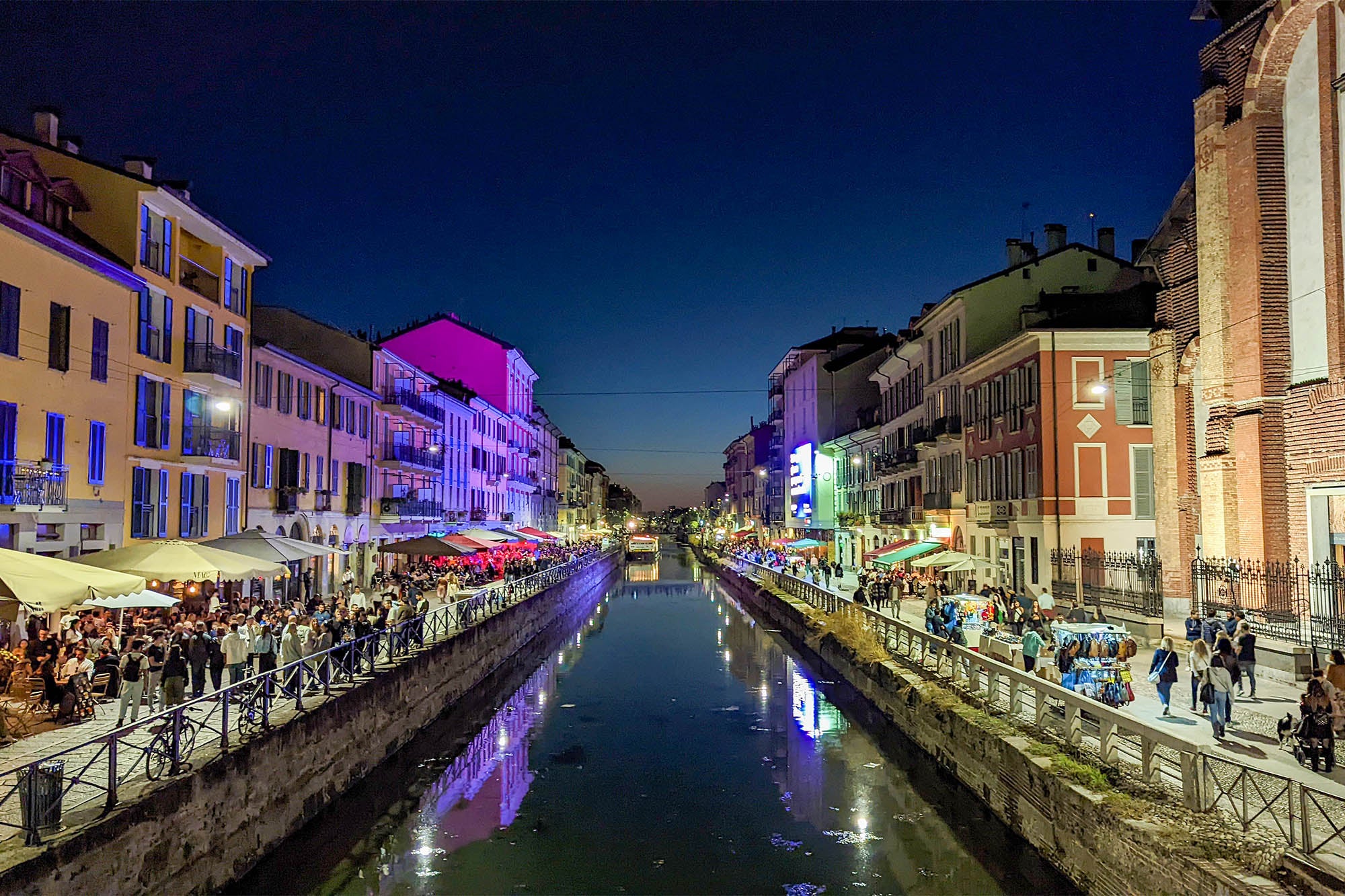
The golden hour paints the Navigli district in hues of honey and rose. Sunlight, softened by the ancient buildings lining the canals, catches the ripples on the water, turning the surface into a shimmering ribbon. This is Milan, but not as most imagine it. Here, the city’s pulse slows to the gentle rhythm of water lapping against stone.
It’s a Saturday morning, and the air in Via Casale carries the scent of freshly baked bread mingling with the subtle perfume of blooming jasmine climbing a weathered wall. The Navigli district, once the industrial arteries of Milan, has transformed into a vibrant, yet wonderfully unhurried, heart for creative souls and those who appreciate life’s finer, slower details.
Start your exploration not with a grand plan, but with a wander. Allow your feet to lead you along the Naviglio Grande, the oldest and most significant of Milan’s canal network. Early on a weekend, before the crowds truly arrive, the atmosphere is one of quiet anticipation. Look for the subtle signs of life awakening: the soft clinking of ceramic cups as a bar prepares for the day, the gentle whir of a sewing machine from a small atelier tucked away in a courtyard.
Consider a detour into one of the many cortili, the internal courtyards that are the secret gardens of Milan. These hidden spaces often reveal workshops where tradition and modernity intertwine. You might stumble upon a bookbinder meticulously restoring a vintage volume, the scent of aged paper and leather a testament to years of dedication. Or perhaps a ceramicist, hands dusted with clay, shaping intricate forms that speak of the earth. These are not galleries designed for fleeting glances; they are spaces of creation, where the artisan’s passion is palpable.
As midday approaches, the Navigli begin to hum with a gentle energy. Lunch offers a chance to delve deeper into Lombard cuisine. Forget hurried sandwiches; seek out a trattoria with checkered tablecloths and a blackboard listing the day’s specials. This is the perfect time to sample a classic risotto alla Milanese, its creamy texture and saffron-infused aroma a true reflection of local flavor. Or perhaps a cotoletta alla Milanese, the breaded veal cutlet fried to a perfect crisp. The key is to linger, to savor each bite, and to engage with the stories the dishes tell – often shared by the family who has been preparing them for generations.
The afternoon is for deepening your appreciation of this unique urban landscape. The Fondazione Pini, for instance, often hosts exhibitions that celebrate Milanese art and history, offering a quiet retreat into culture. Or simply find a bench along the canal, watch the boats drift by, and observe the changing light. The architectural details of the buildings, from elegant Liberty-style facades to simpler, more rustic designs, reveal the layers of history that have shaped this area.
As the late afternoon sun casts longer shadows, the Navigli prepare for their most celebrated ritual: the aperitivo. This is not just a drink; it’s a social institution, a prelude to the evening that invites conversation and relaxation. The rows of bars and restaurants along the canals come alive. Seek out a spot with a terrace that overlooks the water. The ritual begins with a spritz, its vibrant orange hue mirroring the setting sun. Accompanying it is often a generous spread of small bites – olives, nuts, small pizzas, and local cheeses. It’s an opportunity to mingle, to hear the murmur of Italian conversation, and to feel the city’s relaxed evening mood.
For a truly immersive experience, consider a guided exploration focused on the artisan heritage of the Navigli. Many local guides, themselves deeply connected to the district, can lead you to workshops you might otherwise miss, sharing insights into the skills and traditions that keep these crafts alive. They can point out the subtle beauty in a hand-painted sign or the history behind a particular architectural feature.
As dusk settles, the Navigli transform again. The lights from the bars and restaurants begin to twinkle, reflecting on the water and creating a romantic, intimate ambiance. The gentle hum of conversation continues, now a soft soundtrack to the evening. Dinner is another opportunity to explore the culinary heart of the district. Look for restaurants specializing in lake fish, a nod to the proximity of the great northern Italian lakes. Or explore more contemporary interpretations of Milanese classics.
A weekend on Milan’s Navigli is not about ticking off sights. It’s about embracing a slower tempo, about discovering the quiet artistry that flourishes in this urban oasis. It’s about the scent of blooming flowers on a Saturday morning, the taste of perfectly prepared risotto, the warmth of the aperitivo sun, and the soft glow of lights on the water as evening descends. It is an invitation to experience Milan with your senses, at a pace that allows the city’s true character to unfold.
For those seeking to truly immerse themselves in such experiences, understanding the nuances of local life and artisanal traditions is key. Many of Milan’s most rewarding encounters are discovered through a guided exploration of its creative quarters, revealing both the established masters and the emerging talents who shape the city’s cultural landscape.